Non-Invasive Diagnostics for Tulare Foundations
Discovering signs of foundation moisture can be alarming. In the past, finding a hidden pipe failure required random jackhammering through finished floor surfaces until wet mud appeared. Today, specialized slab leak detection Tulare technicians utilize sophisticated non-destructive technology to pinpoint the exact failure zone beneath your concrete before any work begins.
Whether your property is located in Downtown Tulare or a nearby ranch subdivision, our goal is to pinpoint the exact leak location, protect structural integrity, and provide the technical data required to guide permanent slab leak repair in Tulare.
Early Warning Signs You Need an Under-Slab Test
Because domestic water lines maintain between 50 and 70 psi of pressure, a ruptured copper line steadily discharges gallons of water under your foundation around the clock. Watch for these diagnostic indicators:
- Audible Water Movement: Hearing an uninterrupted rushing or hissing noise from walls, floor vents, or floorboards when no faucets are open.
- Localized Warm Floor Areas: Detecting hot tiles or heated carpet fibers that reveal hot water escaping from an under-slab pipe.
- Continuous Water Meter Activity: The flow indicator on your city water meter continues to spin after shutting every fixture inside and outside the home.
- Damp Baseboards and Flooring Discoloration: Moisture slowly rising through slab pores, causing hardwood cupping, vinyl adhesive failure, or grout darkening.
- Sudden Spikes in Water Bills: Receiving an unexpectedly steep municipal utility bill despite normal household water consumption.
Verify Your Meter with a Simple Test
To confirm an active leak right now, shut off all indoor plumbing fixtures, ice makers, and garden hoses. Inspect your exterior water meter: if the small red or blue flow dial is turning, pressurized water is escaping somewhere on your property.
Call (888) 205-7875 to Book a TestStep-by-Step Electronic Leak Detection Process
Finding an underground breach requires a disciplined protocol of isolation, pressure tracking, and acoustic triangulation:
1. Isolating Hot vs. Cold Plumbing Lines
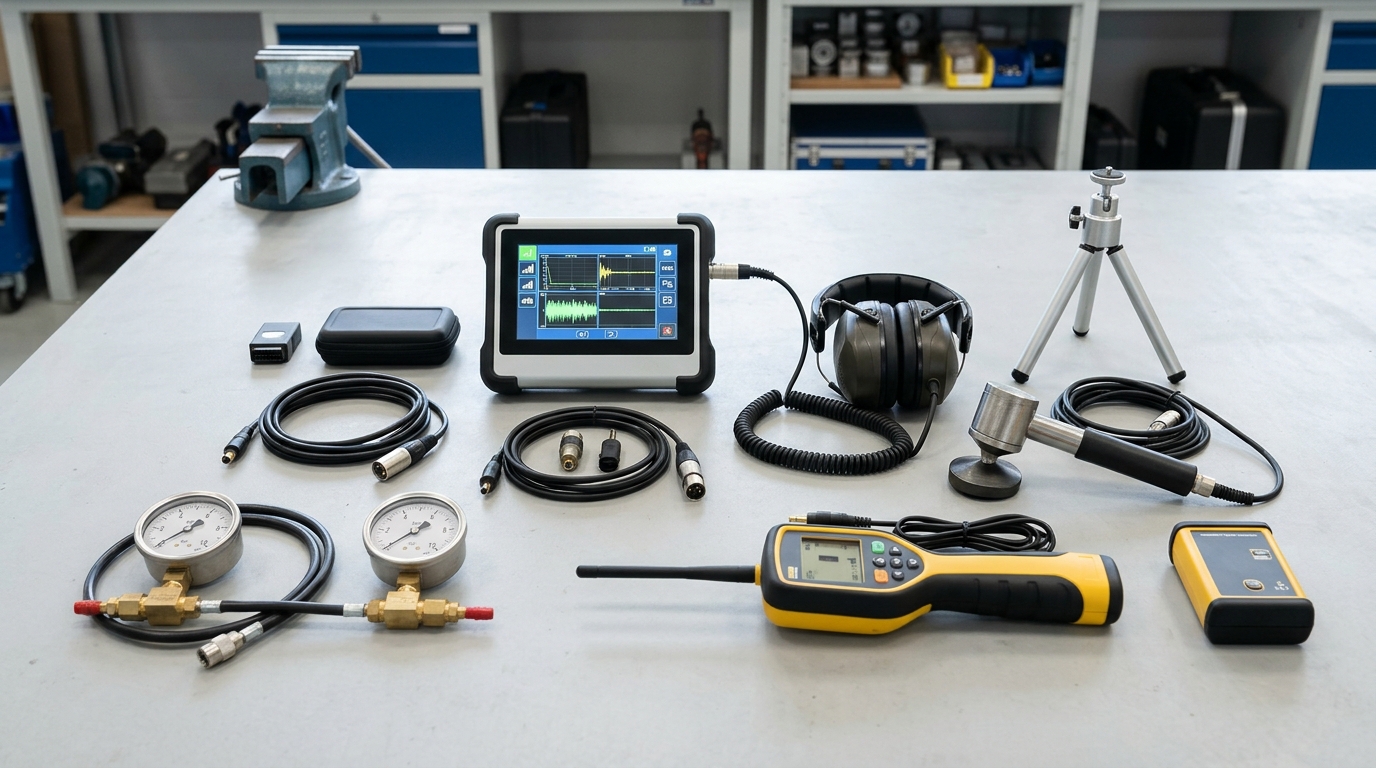
The technician begins by isolating the building's domestic plumbing system. Calibrated pressure gauges are attached to hose bibs or laundry connections. By closing the shutoff valve at the top of the water heater, the technician determines whether the cold line or the hot water supply is losing pressure. In Central Valley homes, hot water lines fail far more frequently due to thermal expansion.
2. Pressure Testing and Acoustic Amplification
Once the compromised line is identified, electronic leak detection Tulare equipment is deployed. Technicians connect a non-toxic nitrogen or compressed air mix into the line. As the gas escapes through the pipe rupture under concrete, it creates a distinct high-frequency sound wave that travels upward through the dense foundation.
3. Precision Ground Microphones and Listening Discs
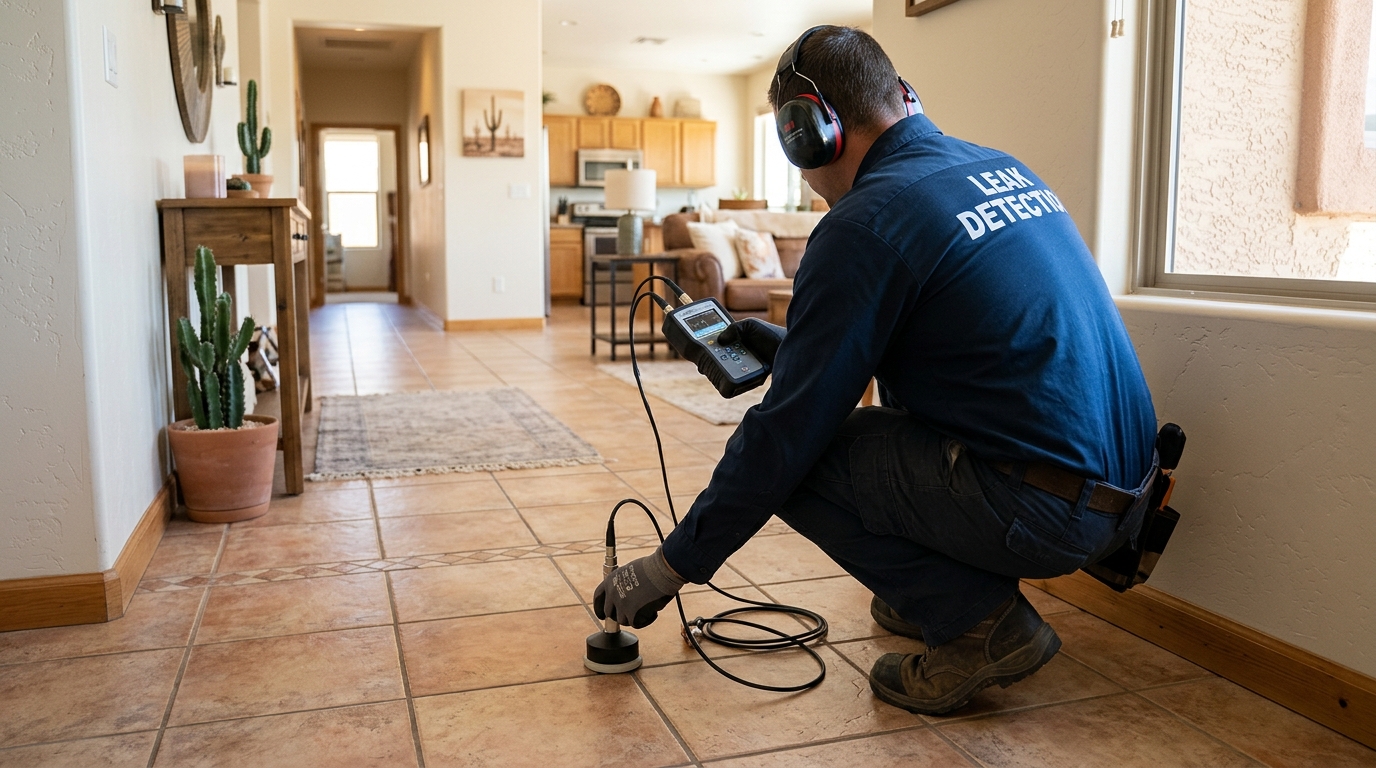
Using specialized acoustic listening discs with frequency filters, the specialist scans floor surfaces throughout the home. By adjusting headphone amplification to screen out ambient household noise, the technician locates the precise frequency peak where escaping water and pressurized gas meet concrete. This acoustic leak under slab detection Tulare method provides pinpoint accuracy.
4. Thermal Infrared Camera Imaging
For hot-water leaks, high-resolution infrared thermal cameras display thermal radiation patterns across flooring materials. Hot water escaping beneath a slab creates a clear thermal plume on the camera monitor, confirming the acoustic findings and mapping the subsurface pipe run.
5. Electromagnetic Line Tracing
Technicians also transmit a low-frequency radio signal through the copper line. Using an electromagnetic receiver wand, they map the exact physical route of the pipe beneath the slab, ensuring any subsequent repair access aligns exactly with the pipe orientation.
Why Accurate Location Keeps Concrete Breaking to a Minimum
Random excavation through a concrete slab risks severing tension cables, fracturing floor tile, and weakening the foundation. By pinpointing the leak to a footprint of just several inches, direct spot repairs require only a minimal access opening.
Furthermore, precise mapping reveals whether the pipe runs through accessible floor space or beneath permanent installations like kitchen islands or structural shear walls. This allows homeowners to make an informed choice between a localized repair and an overhead slab leak reroute.
What the Written Leak Report Includes
Following every professional diagnostic test, you receive a comprehensive written report detailing the findings. This documentation is critical for your own records and for homeowners insurance claims:
- System Isolation Results: Official gauge pressure readings demonstrating active pressure drop on hot or cold circuits.
- Precise Leak Location Diagram: Architectural sketch indicating the room, measurement from fixed walls, and pipe depth.
- Thermal Imaging Evidence: High-resolution thermal captures displaying the subsurface heat bloom.
- Sub-Slab Pipe Condition Analysis: Assessment of surrounding copper health and vulnerability to future pinhole leaks.
- Recommended Repair Methodology: Clear engineering evaluation outlining whether direct spot repair, rerouting, or whole-house repiping is recommended.
Schedule Your Slab Leak Test in Tulare Today
Do not let an underground plumbing failure undermine your home's foundation or drive utility bills out of control. Contact our local specialists for a thorough slab leak test Tulare diagnostic assessment. We serve homeowners throughout Tulare, Downtown neighborhoods, and adjacent communities including Farmersville and Exeter.
For additional details on regional coverage, visit our Service Areas page, or call our direct phone line to talk through your symptoms.